
Gemma 4 Guides
Why Is Kimi K3 Sold Out? The GPU Capacity Pause Explained
Why Is Kimi K3 Sold Out?
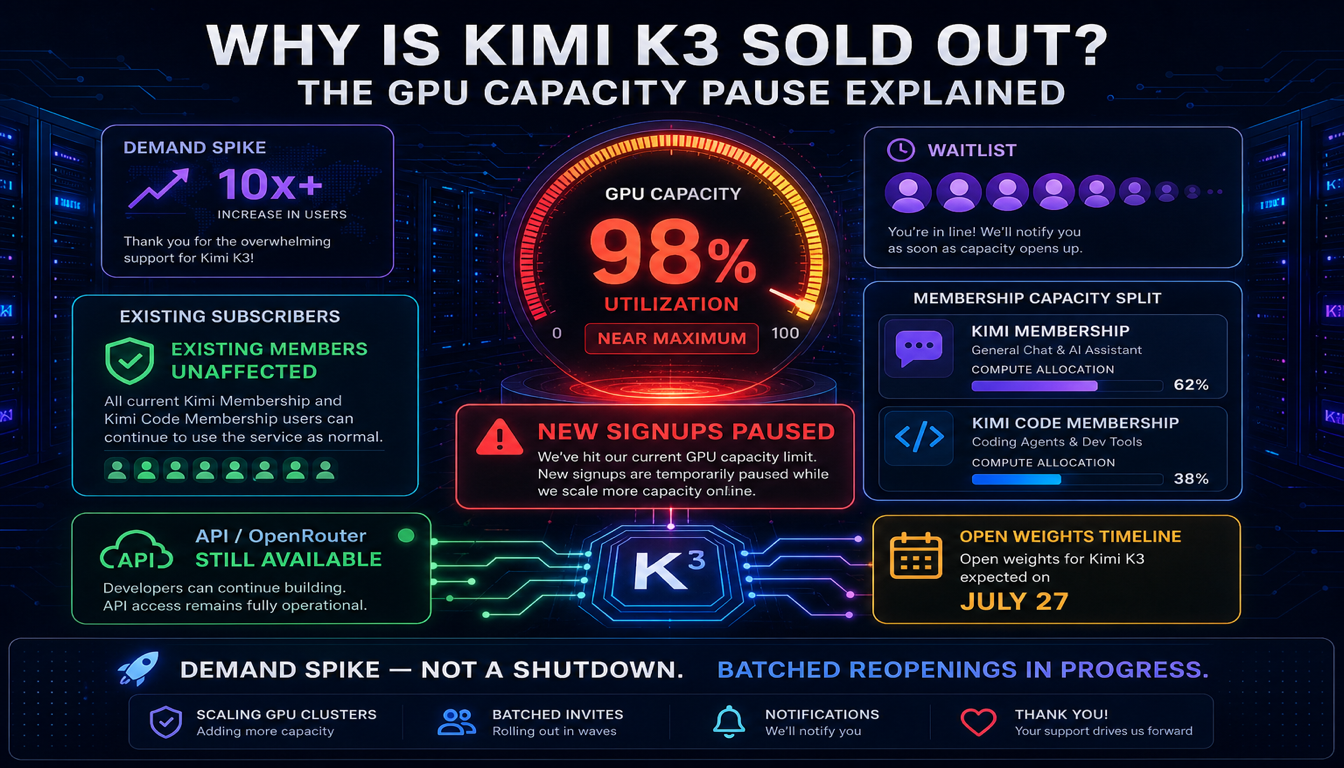
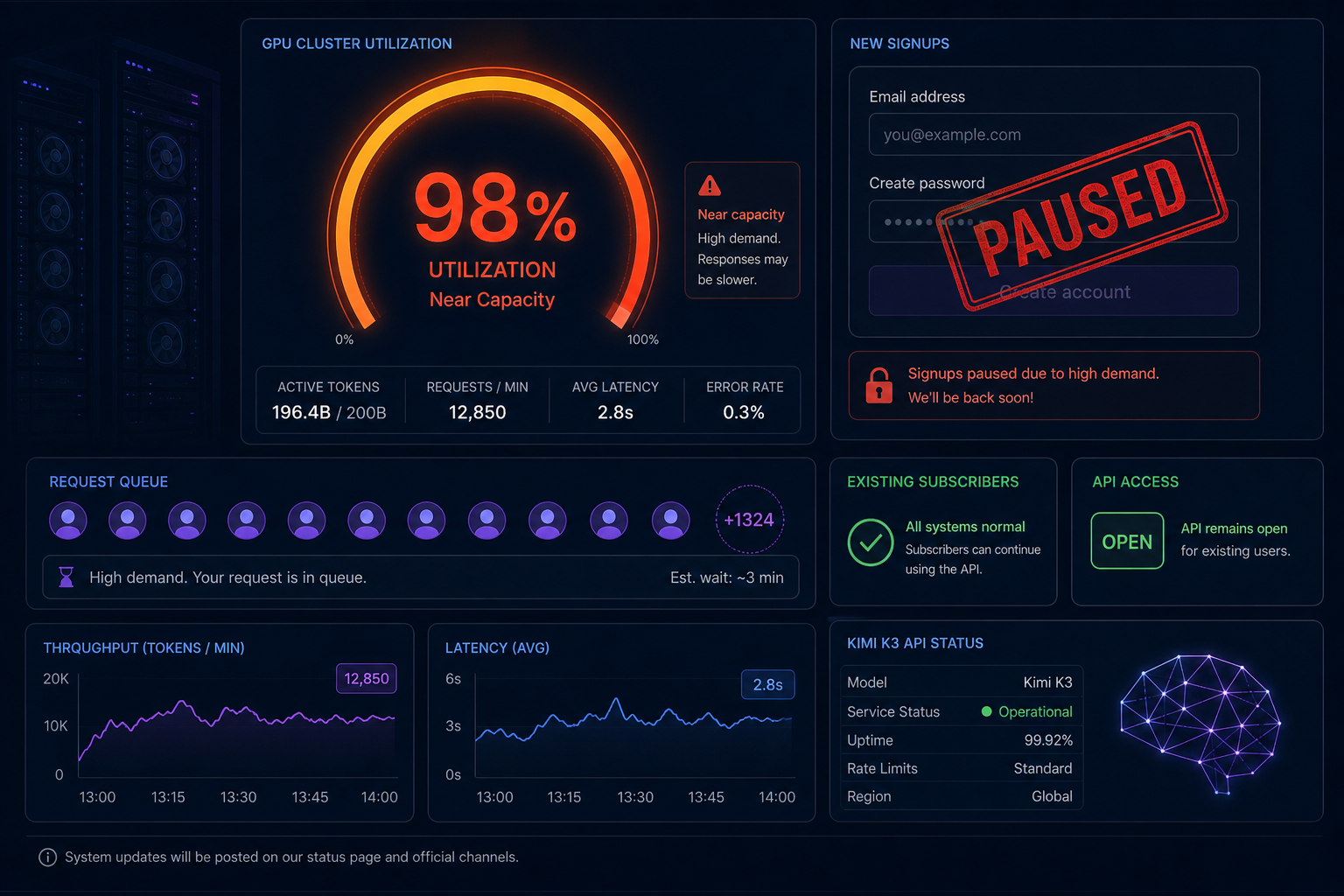
Kimi K3 isn't "sold out" in the literal sense — there's no physical product to run out of. What actually happened: Moonshot AI paused new Kimi K3 subscription signups within 48 hours of its July 16, 2026 launch, after demand pushed close to the limits of the company's available GPU capacity. If you're seeing "sold out," waitlist messaging, or can't sign up for a new Kimi subscription right now, this is why — and it's a demand problem, not a shutdown.
Quick answer
- What's paused: New signups for Kimi's consumer subscription tiers (the paid membership plans for the Kimi app, web chat, and related tools).
- When it happened: Within 48 hours of K3's July 16, 2026 launch — Moonshot announced the pause around July 19–20, 2026.
- Why: User demand exceeded Moonshot's projections and pushed close to the ceiling of its current GPU infrastructure.
- Who's affected: Only people trying to start a new paid subscription. Existing subscribers are explicitly unaffected.
- The fix in progress: Moonshot is reopening new subscription slots in controlled batches rather than all at once, and is splitting its membership system into two separate products to allocate compute more effectively.
- The longer-term fix: Kimi K3's open weights are expected to ship July 27, 2026, which would let organizations self-host the model and sidestep Moonshot's subscription bottleneck entirely.
What Moonshot actually said
Moonshot announced the pause via a post on X, stating: "To protect the experience of existing subscribers, we're temporarily pausing new subscriptions and prioritizing compute for current members." The company also described the situation more informally in comments reported by Yahoo Finance: "Kimi K3 has received far more love than we expected, and our GPUs are feeling it."
Elsewhere, Moonshot has said demand "has pushed close to the limits of our current capacity" — language that lines up with what would be expected from a 2.8-trillion-parameter model going viral days after launch: this isn't a small model that got a traffic spike, it's one of the largest AI models ever released, and even with its sparse mixture-of-experts design (16 of 896 experts active per token), serving it at scale requires substantial GPU infrastructure — reports have put minimum inference hardware at around eight H100- or H200-class GPUs per deployment.
What's actually paused (and what isn't)
This is the detail most coverage glosses over, and it matters if you're trying to get access today:
| Status | |
|---|---|
| New consumer subscription signups (Kimi app / web chat paid tiers) | Paused, reopening in batches |
| Existing paid subscribers | Unaffected — full continued access |
Kimi K3 API (platform.kimi.ai, pay-per-token) |
Not reported as paused — see the pricing and API access guide for current signup steps |
| Kimi K3 on OpenRouter | Separate billing and access path, not tied to Moonshot's direct consumer subscription system |
| Free tier (Adagio) | Not specifically reported as paused, but expect the same demand pressure to apply |
If your goal is programmatic access rather than a new consumer app subscription, the API and OpenRouter routes are the more reliable paths to try first while consumer signups are paused.
Why Moonshot is restructuring memberships, not just adding GPUs
Alongside the pause, Moonshot announced it's splitting its subscription system into two distinct products:
- Kimi Membership — for general web, app, and office-workflow use.
- Kimi Code Membership — specifically for programming and coding-agent workflows.
The logic: coding-agent usage and general chat usage have very different compute profiles — long-horizon agentic coding sessions can burn through far more tokens (and, for K3 specifically, far more always-on reasoning tokens) than typical chat usage. Splitting the products lets Moonshot allocate GPU capacity more precisely to each use case instead of one undifferentiated pool getting drained unevenly by its heaviest users.
The business context behind the demand spike
This isn't happening to a company running out of budget — quite the opposite. Moonshot AI reportedly raised $2 billion or more in May 2026, pushing total historical funding above $5.5 billion and its valuation to roughly $30 billion as of June 2026. The company is also reportedly preparing a Hong Kong IPO, working with Goldman Sachs and China International Capital Corp as advisers, and had already crossed roughly $300 million in annual recurring revenue by June 2026 — all before K3 shipped. Kimi K3's launch reportedly triggered a broader sell-off in AI chip stocks, on the theory that a model this capable, this cheap, and openly available shifts how much compute the rest of the industry needs to buy.
In other words: the capacity crunch is a symptom of Kimi K3 landing harder than even a well-funded, fast-growing lab had provisioned for — not a sign of financial trouble.
When will Kimi K3 be available again?
Two separate timelines to track:
- Batched subscription reopenings. Moonshot has said it will bring new subscribers back gradually rather than lifting the pause all at once. No fixed schedule has been published — check Moonshot's official channels (
platform.kimi.ai, the Kimi app, and Moonshot's X account) for reopening announcements. - Open-weight release, July 27, 2026. This is the more durable fix. Once K3's weights are public, self-hosting becomes possible for teams with their own GPU infrastructure — completely bypassing Moonshot's subscription capacity limits. See Kimi K3: Moonshot AI's 2.8T open-weight model explained for what "open-weight" does and doesn't mean here, and why the weights weren't available at launch in the first place.
What to do if you want access right now
- Try the API directly at
platform.kimi.ai— it hasn't been reported as part of the subscription pause. See the full pricing and setup guide. - Try OpenRouter (
moonshotai/kimi-k3) as an alternative access path with separate billing. - Check if the free tier (Adagio) is open — not confirmed paused, though expect demand pressure.
- Wait for a batch reopening if you specifically want a paid Kimi Membership or Kimi Code Membership subscription.
- Wait for July 27, 2026 if self-hosting is viable for you and you'd rather not depend on Moonshot's consumer capacity at all.
- Evaluate alternatives in the meantime — see Kimi K3 vs Claude if you need a working model today and can't wait on either path.
FAQ
Is Kimi K3 actually sold out? Not in the sense of being discontinued or unavailable. Moonshot paused new consumer subscription signups after demand overwhelmed its GPU capacity within 48 hours of the July 16, 2026 launch. Existing subscribers, and reportedly the API, are unaffected.
Can I still use Kimi K3 if I'm a new user?
Yes, through the API at platform.kimi.ai or OpenRouter, both of which have not been reported as paused. The consumer app's new paid subscription signups are what's currently paused.
When will Kimi K3 subscriptions reopen? Moonshot has said it will reopen new subscription slots in controlled batches rather than all at once, but hasn't published a fixed date. The more predictable milestone is the open-weight release, expected July 27, 2026, which removes the dependency on Moonshot's subscription capacity entirely for teams that can self-host.
Why did Kimi K3 run out of capacity so fast? It's a 2.8-trillion-parameter model — one of the largest ever released — and demand exceeded Moonshot's projections within 48 hours. Even with a sparse mixture-of-experts design, serving a model this large at scale requires substantial GPU infrastructure, and Moonshot chose to pause new signups rather than degrade service for existing users.
What's the difference between Kimi Membership and Kimi Code Membership? Moonshot is splitting its subscription system into a general-use tier (Kimi Membership, for web/app/office use) and a coding-specific tier (Kimi Code Membership, for programming workflows), so it can allocate GPU capacity separately to each usage pattern instead of one pool serving both.
Is this related to Kimi K3's open-weight release? Indirectly. The subscription pause is about Moonshot's own hosted capacity. The open-weight release (expected July 27, 2026) is a separate, longer-term fix that lets organizations run K3 on their own hardware instead of depending on Moonshot's subscription system at all.
Related guides
Related guides
Continue through the Gemma 4 cluster with the next guide that matches your current decision.
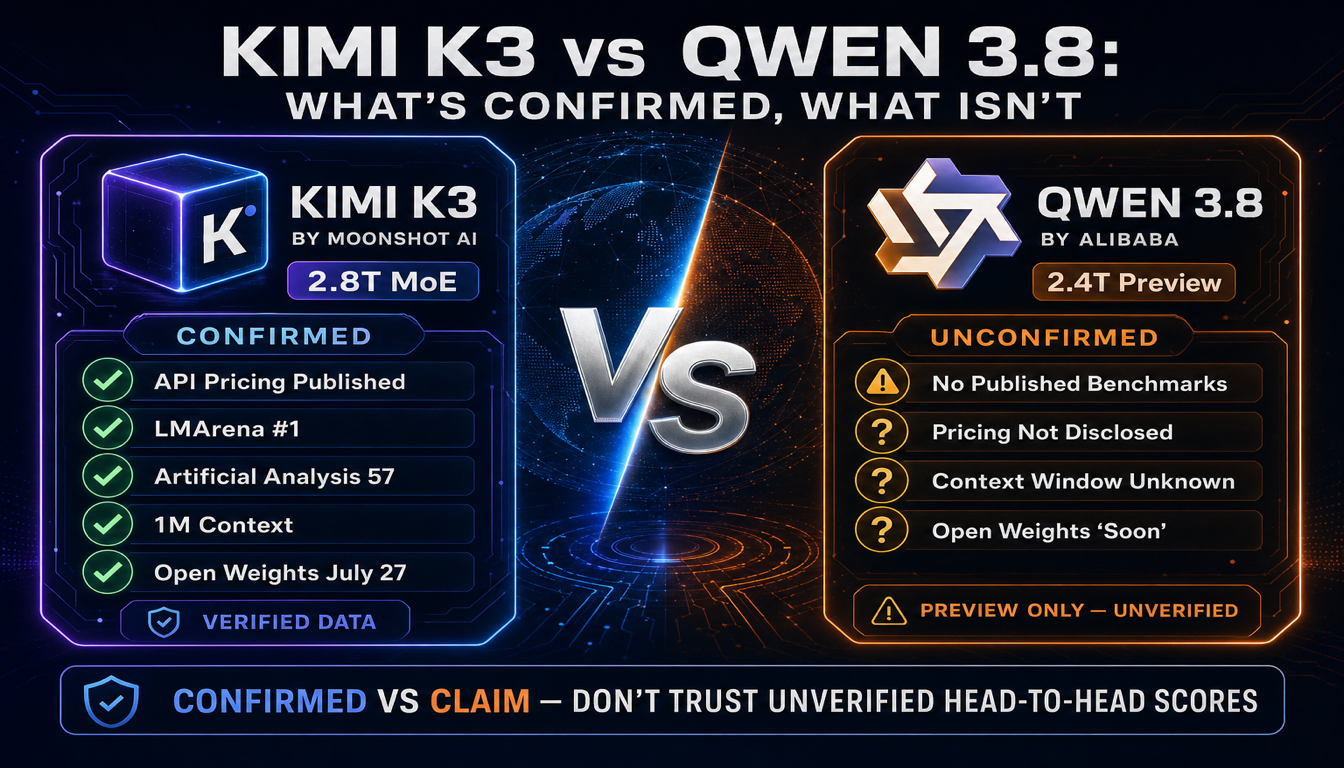
Kimi K3 vs Qwen 3.8: What's Confirmed, What Isn't (July 2026)
Alibaba previewed Qwen 3.8 three days after Kimi K3 launched, calling it "second only to Fable 5." Problem: Qwen 3.8 doesn't have a single published benchmark yet. Here's what's actually confirmed on both sides before you pick one.
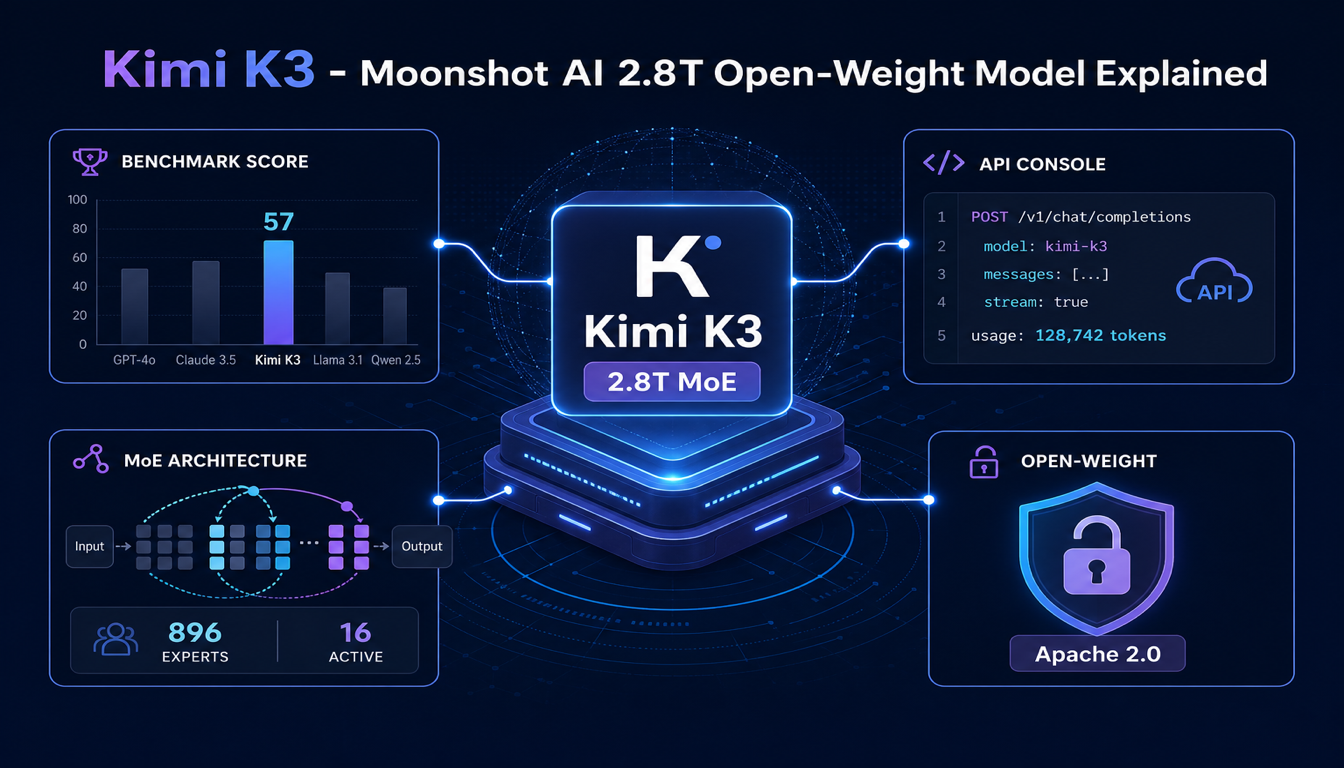
Kimi K3: Moonshot AI's 2.8T Open-Weight Model Explained
Moonshot AI's Kimi K3 launched July 16, 2026 as a 2.8-trillion-parameter open-weight model that beats Claude Opus 4.8 on several benchmarks. Here is what it actually is, what's still missing, and how to try it today.
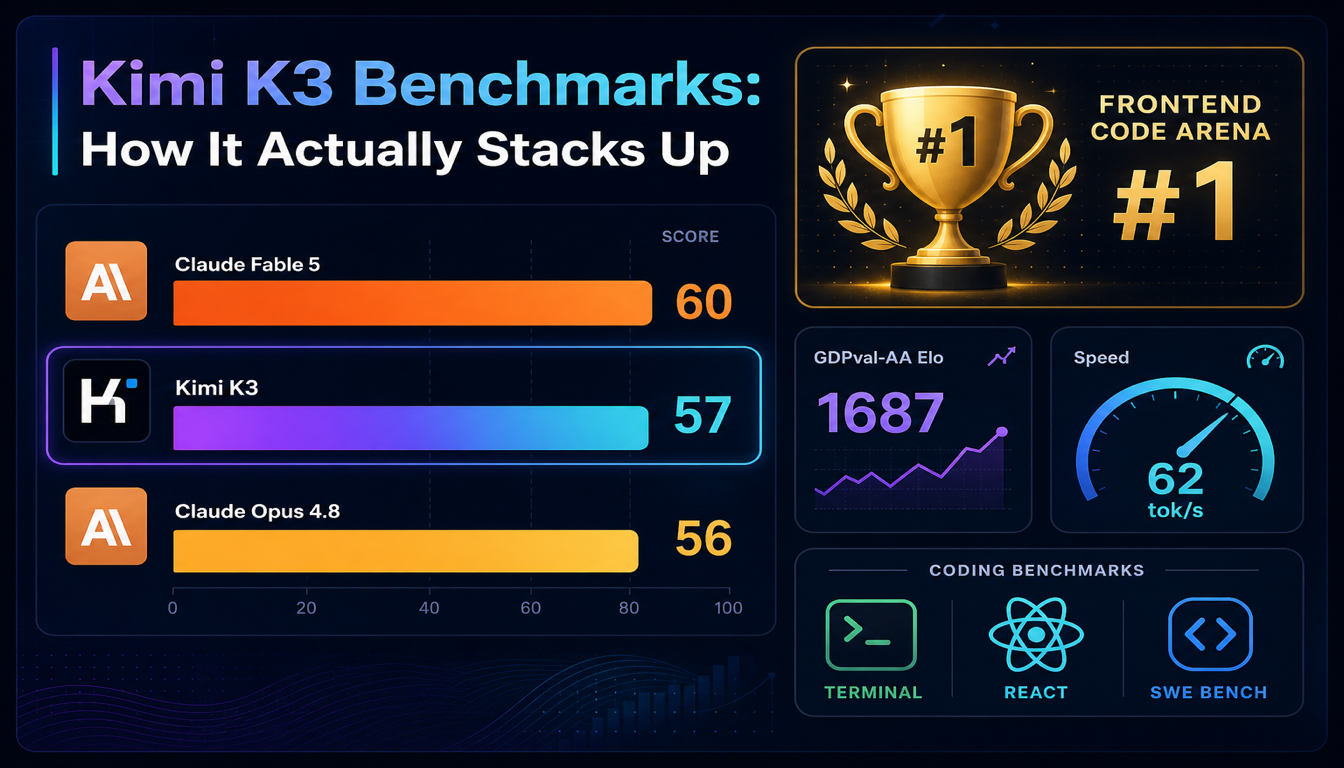
Kimi K3 Benchmarks: How It Actually Stacks Up
Kimi K3 hit #1 on LMArena's Frontend Code Arena and beat Claude Opus 4.8 on the Artificial Analysis Intelligence Index within a day of launch. Here's what the numbers actually say — and where they don't tell the whole story.
Still deciding what to read next?
Go back to the guide hub to browse model comparisons, setup walkthroughs, and hardware planning pages.