
Gemma 4 Guides
Gemma 4 Review: Benchmarks, Performance, and Whether It Is Worth Using

If you are looking for a Gemma 4 review, you probably do not want marketing copy. You want a clear answer on quality, licensing, deployment friction, and whether this model family is worth your time.
The short version of this Gemma 4 review is simple: Gemma 4 is one of the most important open-weight releases of 2026 so far because it combines strong official results, practical size options, and an Apache 2.0 license that removes a lot of enterprise hesitation.

Gemma 4 review: the quick verdict
This Gemma 4 review comes down to four points:
- Gemma 4 launched on April 2, 2026 and now includes five main model options: E2B, E4B, 12B, 26B A4B, and 31B.
- The family covers edge, workstation, and server use cases better than many one-size-fits-all launches.
- The official Gemma 4 benchmark results are strong in coding, math, science, and multimodal reasoning.
- The real story in this Gemma 4 review is not only quality. It is also that Apache 2.0 makes Gemma 4 much easier to adopt than earlier Gemma releases.
If you want the practical buying-decision answer, E4B is the safest local starting point, 12B is the new multimodal middle tier, 26B A4B is the efficiency-focused high-end option, and 31B is the quality-first choice.
What changed in the Gemma 4 release
Any serious Gemma 4 review has to start with what is actually new.
Google positioned Gemma 4 as a model family with a wider deployment range than earlier Gemma generations. The E2B and E4B edge models support text, image, audio, and video input. The newer 12B model adds a stronger native multimodal middle tier with 256K context, while the 26B A4B and 31B models target larger local and server setups. E2B and E4B offer 128K context; 12B, 26B A4B, and 31B reach 256K context.
That matters because a useful Gemma 4 review should not treat the family like one model. Gemma 4 is really five different purchase decisions:
- E2B for the lightest hardware footprint
- E4B for the best balanced local trial
- 12B for a stronger audio/video-capable middle tier
- 26B A4B for MoE-style efficiency at the high end
- 31B for the strongest dense-model quality in the family
Another reason this Gemma 4 review is positive is licensing. Gemma 4 moved to Apache 2.0, which is a meaningful change for teams that care about procurement, redistribution, and long-term compliance.
Gemma 4 benchmark snapshot
The official Gemma 4 benchmark picture is strong enough that benchmark tables are not just decoration in this article. They are part of the adoption case.
Here are the official Gemma 4 benchmarks that matter most from the original launch comparison. Because 12B arrived later, evaluate its current scores from Google's model card alongside this table when you are making a fresh deployment decision.
| Benchmark | 31B IT Thinking | 26B A4B IT Thinking | E4B IT Thinking | E2B IT Thinking |
|---|---|---|---|---|
| MMMLU | 85.2% | 82.6% | 69.4% | 60.0% |
| MMMU Pro | 76.9% | 73.8% | 52.6% | 44.2% |
| AIME 2026 | 89.2% | 88.3% | 42.5% | 37.5% |
| LiveCodeBench v6 | 80.0% | 77.1% | 52.0% | 44.0% |
| GPQA Diamond | 84.3% | 82.3% | 58.6% | 43.4% |
This Gemma 4 review reads those numbers in a practical way:
- 31B is the strongest all-around model in the family
- 26B A4B stays surprisingly close on quality
- E4B is much more than a toy model
- E2B is for access and experimentation, not benchmark dominance
If your workflow depends on code generation, long reasoning chains, or multimodal analysis, the official Gemma 4 benchmark data gives you a real reason to take the family seriously.
Gemma 4 performance in the real world
A useful Gemma 4 review cannot stop at leaderboard scores. It also has to ask what Gemma 4 performance looks like when you try to run the models.
Google published approximate memory guidance that makes planning easier:
| Model | BF16 | 8-bit | Q4 |
|---|---|---|---|
| Gemma 4 E2B | 11.4 GB | 5.7 GB | 2.9 GB |
| Gemma 4 E4B | 17.9 GB | 8.9 GB | 4.5 GB |
| Gemma 4 12B | 26.7 GB | 13.4 GB | 6.7 GB |
| Gemma 4 26B A4B | 57.7 GB | 28.8 GB | 14.4 GB |
| Gemma 4 31B | 69.9 GB | 34.9 GB | 17.5 GB |
Those numbers instantly improve this Gemma 4 review, because they let you match the model to the machine instead of guessing from parameter counts alone.
The most interesting third-party Gemma 4 performance result so far comes from DGX Spark testing. In that setup, the 26B A4B model delivered much higher decode throughput than the dense 31B build under bandwidth-limited conditions. Reported decode throughput was about 23.7 tokens per second for 26B A4B bf16, compared with 10.6 tokens per second for 31B AWQ int4 and 3.7 tokens per second for 31B bf16.
That is why this Gemma 4 review treats 26B A4B as more than a compromise model. It is often the smart model if you care about usable Gemma 4 performance, not just the highest dense quality score.
Gemma 4 review versus competitors
No Gemma 4 review is complete without competitor context.
On Arena AI snapshots around release, Gemma 4 31B posted a text score of 1452 and Gemma 4 26B A4B posted 1441. That placed them in very competitive territory for open models and even close to or above some well-known proprietary references shown on the same board.
From a decision-making point of view, this Gemma 4 review would compare the family this way:
- Against Llama 4: Gemma 4 has a cleaner licensing story for many teams because Apache 2.0 is easier to reason about than a community license.
- Against Mistral Large 3: Gemma 4 is highly competitive while giving buyers a wider spread of model sizes.
- Against GPT-4o as a reference point: Gemma 4 is self-hostable, flexible, and much easier to control locally, even if a hosted frontier model can still win in some managed-service scenarios.
That mix of strong Gemma 4 benchmarks, flexible size options, and permissive licensing is why this Gemma 4 review lands on a favorable verdict.
Why Apache 2.0 changes the buying decision
The license deserves its own section in any Gemma 4 review.
Earlier Gemma generations came with custom terms that created extra downstream obligations. Gemma 4 uses Apache 2.0, which is much easier for legal, platform, and procurement teams to accept. If you are comparing open models for a real product, that difference can matter as much as raw Gemma 4 benchmark performance.
In plain English, Apache 2.0 makes Gemma 4 easier to:
- evaluate for commercial use
- integrate into internal products
- redistribute with fewer custom restrictions
- defend in due-diligence conversations
That is a big reason this Gemma 4 review is more positive than many reviews of technically strong but operationally awkward model launches.
Which Gemma 4 model should you choose?
This Gemma 4 review recommends a simple selection framework:
- Choose E2B if you need the lightest entry point.
- Choose E4B if you want the safest first local deployment.
- Choose 12B if you want native audio/video, 256K context, and a lower memory footprint than the workstation models.
- Choose 26B A4B if you care most about high-end efficiency and strong Gemma 4 performance.
- Choose 31B if you want the best quality the family offers and your hardware can support it.
If you are still narrowing it down, these guides help:
- What is Gemma 4?
- Gemma 4 hardware requirements
- Gemma 4 GGUF download guide
- How to run Gemma 4 with llama.cpp
- How to run Gemma 4 in Ollama
- Gemma 4 API guide
- Gemma 4 on Windows guide
- Gemma 4 on iPhone and iOS
- Gemma 4 model comparison: E2B vs E4B vs 12B vs 26B A4B vs 31B
- Gemma 4 A4B vs E4B: which model to run
- Does DiffusionGemma work with llama.cpp?
- GLM 5.2 vs Gemma 4: Which model to use in 2026?
Final Gemma 4 review
The final Gemma 4 review is that Google released a model family that is easy to take seriously for both technical and operational reasons. The official Gemma 4 benchmarks are strong, the real Gemma 4 performance story is promising, the model lineup is clear, and Apache 2.0 removes a lot of adoption friction.
If you want the short recommendation from this Gemma 4 review, start with E4B for a balanced local test, try 12B when you need stronger multimodal capability without workstation-class memory, move to 26B A4B if efficiency matters, and use 31B when you are deliberately paying for the best quality in the family.
Related guides
Continue through the Gemma 4 cluster with the next guide that matches your current decision.
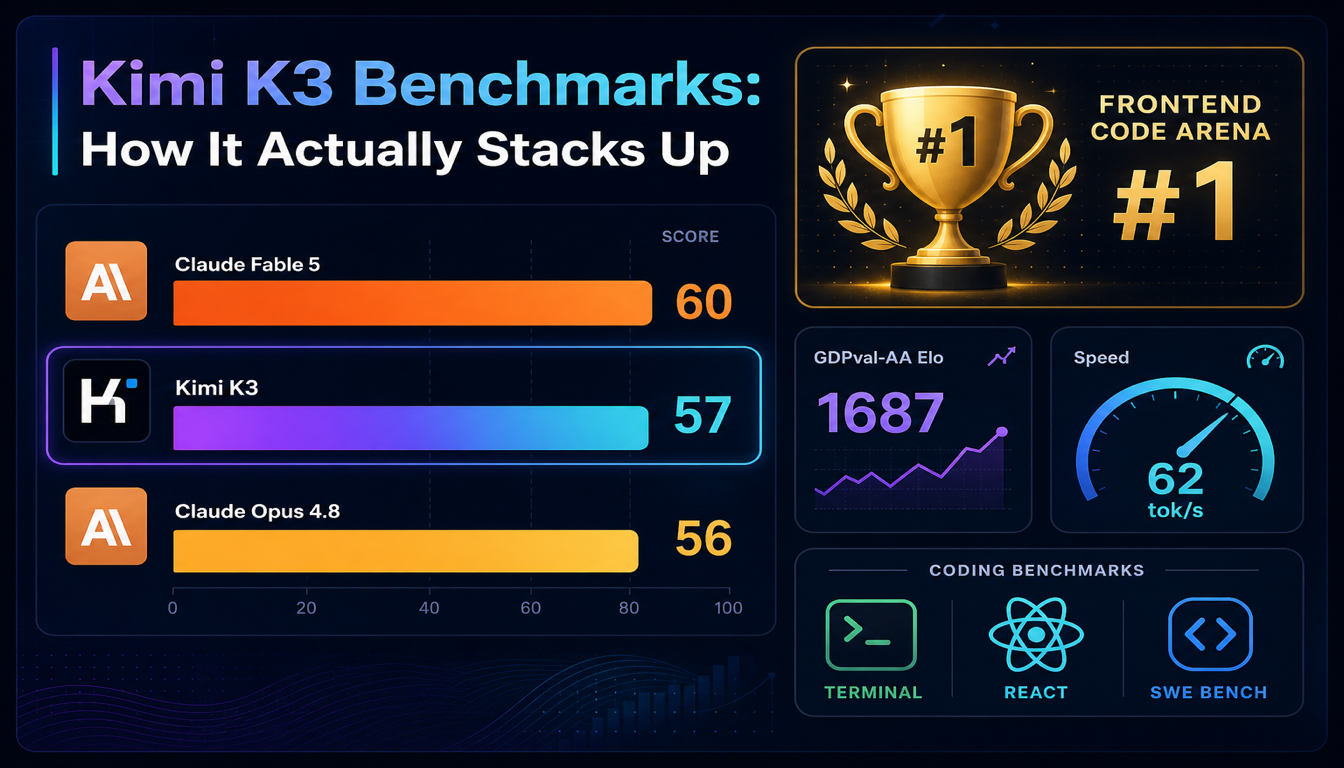
Kimi K3 Benchmarks: How It Actually Stacks Up
Kimi K3 hit #1 on LMArena's Frontend Code Arena and beat Claude Opus 4.8 on the Artificial Analysis Intelligence Index within a day of launch. Here's what the numbers actually say — and where they don't tell the whole story.
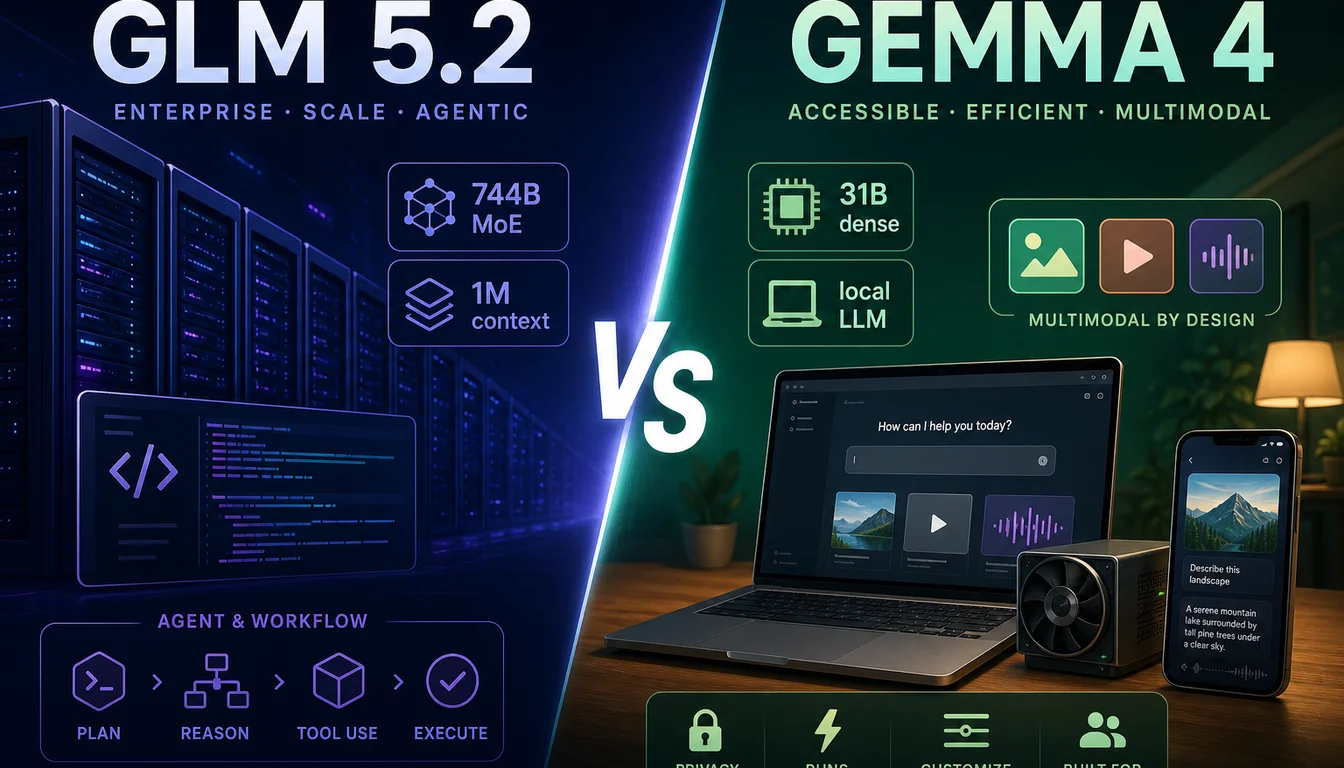
GLM 5.2 vs Gemma 4: Which Model Should You Run in 2026?
GLM 5.2 is the open-weights coding giant with a 1M context window; Gemma 4 is the local-friendly family from 3GB to 20GB VRAM. Here is how to choose.

Does DiffusionGemma Work in LM Studio? Current Status (June 2026)
Both LM Studio's llama.cpp and MLX engines fail to load DiffusionGemma in June 2026. Here is what the errors mean, where they are tracked, and which tools actually work.
Still deciding what to read next?
Go back to the guide hub to browse model comparisons, setup walkthroughs, and hardware planning pages.